How Contractors Can Avoid Surprise Tax Bills in Canada

Learn how contractors in Canada can avoid surprise tax bills with better bookkeeping, tax planning, expense tracking, and GST/HST management.
How Contractors Can Avoid Surprise Tax Bills in Canada
For many self-employed contractors, the year can feel strong financially. Jobs are coming in, customers are paying, and the bank account looks healthy. Then tax season arrives and the amount owed is far higher than expected.
That surprise usually does not happen because someone did something wrong. It happens because contractor income works differently from employee income. Taxes are not automatically deducted from most contractor payments, GST collected is not business income, and profit can grow quietly in the background if bookkeeping is not kept current. The Canada Revenue Agency also requires many self-employed individuals to pay their own income tax and Canada Pension Plan (CPP) contributions, and in some cases quarterly tax instalments as well. [oai_citation:0‡Canada](https://www.canada.ca/en/services/benefits/publicpensions/cpp/contributions.html?utm_source=chatgpt.com)
The good news is that surprise tax bills are usually preventable. With a simple system for bookkeeping, tax savings, and expense tracking, contractors can stay ahead of what they owe instead of scrambling at the last minute.
Why Contractors Get Hit With Unexpected Tax Bills
A common situation looks like this: the business had a busy year, money was flowing in consistently, and there always seemed to be enough cash available. But when the tax return is prepared, the balance owing is much larger than expected.
This happens because the money sitting in your bank account is not the same as the amount you are free to spend. Some of it may need to go toward income tax, some may relate to CPP if you are self-employed as a sole proprietor or partner, and some may be GST or HST that you collected on behalf of the government. [oai_citation:1‡Canada](https://www.canada.ca/en/revenue-agency/services/tax/businesses/topics/gst-hst-businesses/when-register-charge.html?utm_source=chatgpt.com)
Several things commonly cause surprise tax bills for contractors:
You receive gross payments with no tax withheld
You may have to pay both the employee and employer portions of CPP if you are self-employed
GST or HST collected can get mixed in with regular operating cash
Expenses may not be tracked consistently
Profit may grow faster than expected during a busy year
You may eventually be required to make tax instalment payments if your net tax owing is high enough
The difference between contractors who get blindsided and contractors who stay in control is usually not luck. It is having a year-round system.
Know What Actually Gets Taxed
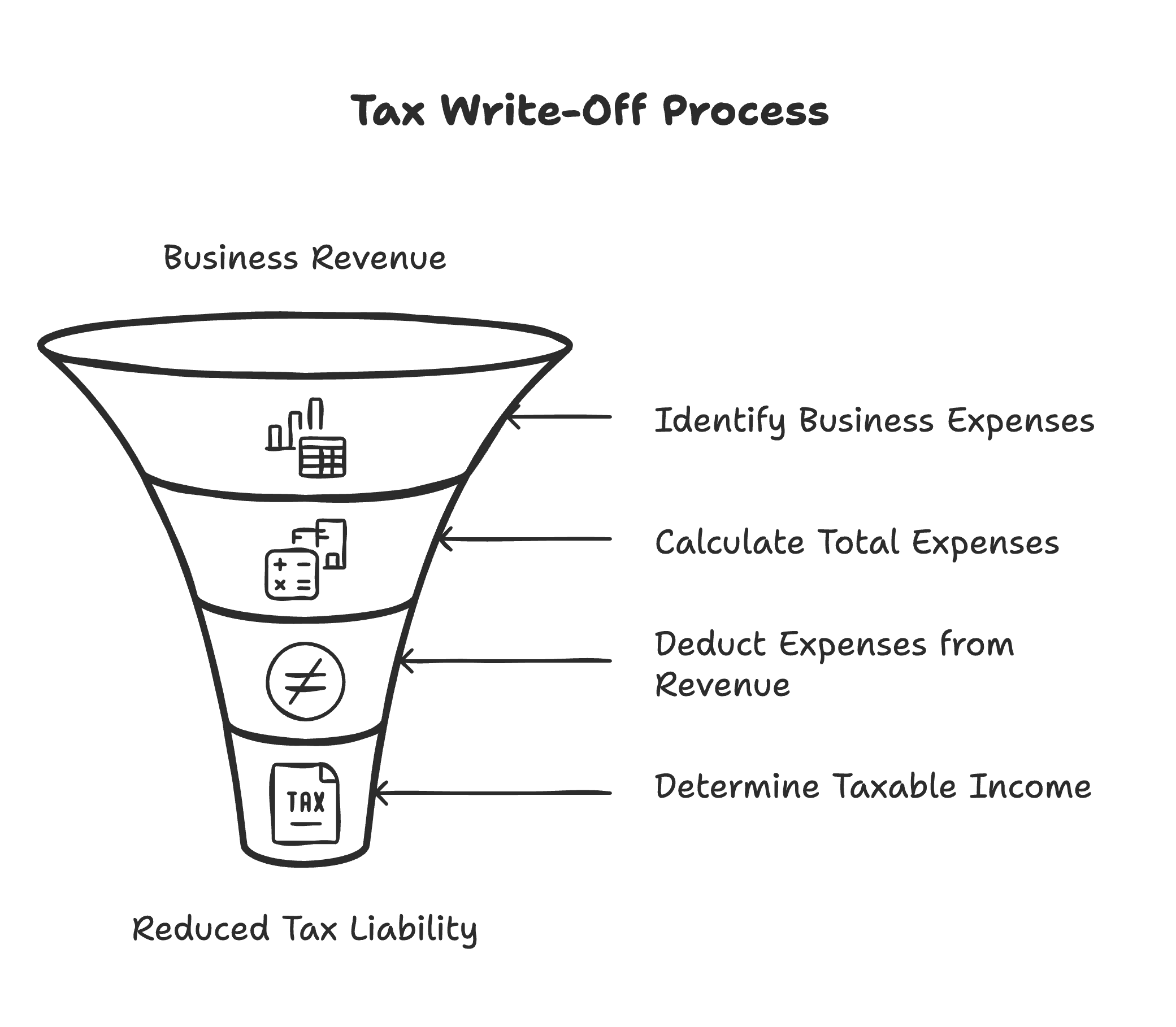
One of the biggest misunderstandings among contractors is thinking tax is based on total revenue. In most cases, that is not how it works. Taxes are generally based on net business income, which is what remains after deductible business expenses are subtracted from your revenue. CRA guidance confirms that reasonable expenses incurred to earn business income can generally be deducted, while personal expenses cannot. [oai_citation:2‡Canada](https://www.canada.ca/en/revenue-agency/services/forms-publications/publications/t4002/t4002-5.html?utm_source=chatgpt.com)
For example, if a contractor brings in $140,000 in revenue but spends money on materials, vehicle costs, tools, insurance, software, and other legitimate business expenses, the taxable amount is generally based on the profit left over after those expenses are deducted.
That is why bookkeeping matters so much. If your records are not current, you may not know your real profit until your accountant prepares the year-end return. By then, there is not much time left to plan.
Employees and Contractors Are Taxed Differently
Employees usually have income tax and CPP deducted automatically from each paycheque. Contractors usually do not. As a result, self-employed contractors need to create their own system to put money aside for taxes as they earn it. CRA also states that self-employed individuals generally pay CPP contributions based on their net business income, and they pay both portions themselves. [oai_citation:3‡Canada](https://www.canada.ca/en/services/benefits/publicpensions/cpp/contributions.html?utm_source=chatgpt.com)
Depending on how your business is structured, you may need to account for:
Personal income tax
CPP contributions if you are self-employed
GST collected, or HST in participating provinces
Tax instalments if CRA requires them
If you are incorporated, the picture can be different because compensation can be taken through salary, dividends, or a mix of both, and the tax treatment changes depending on how you pay yourself. That is one reason contractor-specific advice matters.
Use a Simple Tax Buffer System
One of the easiest ways to avoid a tax shock is to stop treating every client payment as spendable money.
A practical system looks like this:
A client payment comes in
A set percentage is transferred to a separate tax savings account
The rest stays in the operating account for business use
This approach works because it removes guesswork. Instead of trying to come up with a large lump sum at tax time, you build your tax reserve gradually all year.
The exact percentage to set aside depends on your income, deductions, province, and business structure. There is no one-size-fits-all number. But setting aside money consistently is far better than waiting until filing season and hoping there is enough left.
Keep Bookkeeping Current So You Can See Your Profit
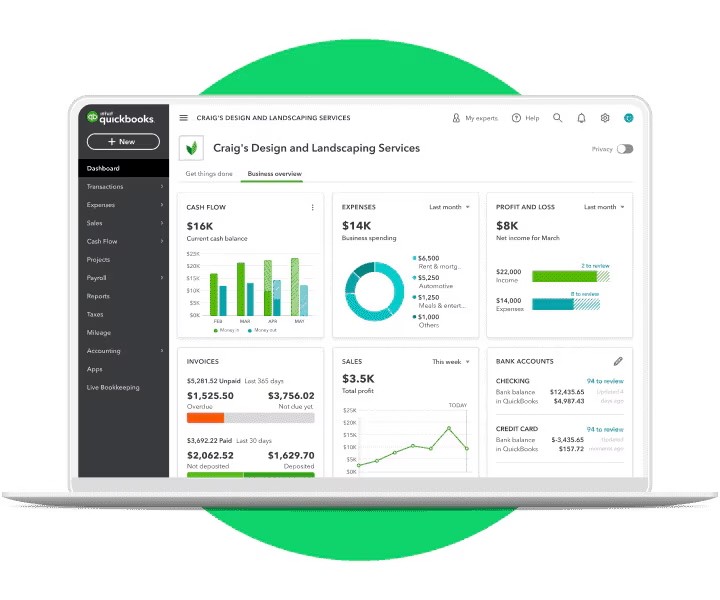
Bookkeeping is not just an admin task for your accountant. It is how you see what your business is really earning.
When your books are updated monthly, you can usually see:
Total revenue earned
Expenses tied to running the business
Estimated profit
GST or HST collected
Cash flow patterns
That matters because income tax and CPP for self-employed individuals are tied closely to business profit, not just sales. When profit rises and no one notices, the future tax bill rises too. [oai_citation:4‡Canada](https://www.canada.ca/en/services/benefits/publicpensions/cpp/contributions.html?utm_source=chatgpt.com)
Accurate, current bookkeeping gives you a chance to adjust early. That could mean increasing your tax savings transfers, reviewing expenses more carefully, or planning for instalments before CRA sends a reminder.
Capture Every Deductible Expense
Many contractors pay more tax than necessary simply because they fail to track all legitimate business expenses. CRA states that business expense claims must be supported with invoices, receipts, or other vouchers, and only the business portion can be claimed when an expense is partly personal. [oai_citation:5‡Canada](https://www.canada.ca/en/revenue-agency/services/tax/businesses/small-businesses-self-employed-income/business-income-tax-reporting/business-expenses.html?utm_source=chatgpt.com)
Common deductible expenses for contractors may include:
Tools and equipment
Materials and supplies
Vehicle expenses related to business use
Fuel
Insurance
Safety gear and work clothing that qualifies
Business-use cell phone costs
Software and subscriptions
Accounting and bookkeeping fees
Missing expenses means overstating profit. And overstating profit usually means paying more tax than necessary.
The key is consistency. Save receipts, record purchases properly, and avoid waiting until year-end to sort everything out.
Do Not Spend Your GST or HST
This is one of the most common cash-flow mistakes contractors make.
If you are registered for GST/HST and charge it on invoices, that money is not your income. You are collecting it for the government and you will eventually need to remit it. CRA’s registration rules also confirm that many businesses must register once they exceed the $30,000 small supplier threshold, with timing rules that depend on whether the threshold is exceeded in a single quarter or over four consecutive calendar quarters. [oai_citation:6‡Canada](https://www.canada.ca/en/revenue-agency/services/tax/businesses/topics/gst-hst-businesses/when-register-charge.html?utm_source=chatgpt.com)
For many contractors across Canada, GST is the main sales tax they deal with. In participating provinces, HST may apply instead. Either way, the principle is the same: do not treat sales tax collected as available operating cash. [oai_citation:7‡Canada](https://www.canada.ca/en/revenue-agency/services/tax/businesses/topics/gst-hst-businesses/when-register-charge.html?utm_source=chatgpt.com)
A simple fix is to track GST/HST separately in your bookkeeping and, in many cases, move the estimated amount collected into a separate account so it does not get spent by accident.
Be Ready for Tax Instalments
Some contractors avoid the first surprise tax bill, only to get hit by the next one: instalment requirements.
CRA may require individuals to pay income tax by instalments if their net tax owing is more than $3,000 for the current year and was also more than $3,000 in either of the two previous years. For Quebec residents, the threshold is $1,800. Instalment due dates are generally March 15, June 15, September 15, and December 15. [oai_citation:8‡Canada](https://www.canada.ca/en/revenue-agency/services/payments/payments-cra/individual-payments/income-tax-instalments/who-pays-instalments.html?utm_source=chatgpt.com)
If you have a profitable contracting business, this is something to watch for. Instalments are not an extra tax. They are simply CRA asking you to pay tax during the year instead of in one big lump sum later.
Planning for instalments in advance can make cash flow much easier to manage.
Do Not Confuse the Filing Deadline With the Payment Deadline
This catches a lot of self-employed people off guard.
Self-employed individuals generally have until June 15 to file their personal tax return, but any balance owing is still usually due by April 30. That means waiting until June to think about your taxes can create interest charges if you owed money back in April. [oai_citation:9‡Canada](https://www.canada.ca/en/revenue-agency/services/tax/individuals/topics/important-dates-individuals.html?utm_source=chatgpt.com)
In plain language: you may get extra time to file, but not extra time to pay.
Monitor Your Numbers Throughout the Year
Revenue alone does not tell you whether you are in a good tax position. A business can have strong sales and still run into trouble if spending is high, margins are thin, or taxes are not being set aside.
Reviewing your numbers regularly helps answer important questions:
Is profit increasing?
Are expenses rising too fast?
Is enough being set aside for tax?
Is GST/HST being tracked correctly?
Will instalments likely be required?
Those are the kinds of questions that prevent problems before tax season arrives.
Work With an Accountant Who Understands Contractors
Not every accountant understands the day-to-day reality of trades businesses. Contractors often deal with job materials, fuel, tools, vehicle use, subcontractor payments, seasonal cash flow swings, and GST/HST issues that can easily get messy if no one is watching them throughout the year.
An accountant who works with contractors can help with:
Estimating taxes before year-end
Making sure deductible expenses are claimed properly
Managing GST/HST obligations
Preparing for tax instalments
Keeping bookkeeping accurate and current
That kind of support is often the difference between staying ahead and constantly reacting. Contractor Tax Hub is one example of the type of contractor-focused support that can help tradespeople stay organized year-round.
Avoid the Last-Minute Tax Season Scramble
When records are disorganized, tax season turns into a cleanup project. Receipts are missing, invoices need to be sorted, bank statements have to be reviewed, and your accountant has to spend time piecing the year together before the real tax work even begins.
That creates three problems:
More stress
A higher risk of missed deductions or errors
Less time for tax planning
By keeping records updated during the year, tax season becomes routine instead of chaotic.
Staying Organized Prevents Costly Surprises
For contractors, taxes are part of running a business. But a large unexpected bill is usually a sign that the system around the business needs work.
The fix is usually straightforward:
Keep bookkeeping current
Track every deductible expense
Separate tax savings from operating cash
Do not spend GST/HST collected
Watch for instalment requirements
Get professional help before problems build up
When these habits are in place, tax season becomes much more predictable.
Frequently Asked Questions
Why do contractors often get surprise tax bills?
Because taxes are usually not deducted from contractor payments the way they are for employees. Contractors often receive the full gross payment and must set aside money themselves for income tax, CPP if applicable, and GST/HST remittances. [oai_citation:10‡Canada](https://www.canada.ca/en/revenue-agency/services/tax/businesses/topics/gst-hst-businesses/when-register-charge.html?utm_source=chatgpt.com)
How much should contractors set aside for taxes?
There is no universal percentage. The right amount depends on your income, deductions, province, and business structure. The important part is building a consistent habit of transferring part of each payment into a separate tax account.
Does bookkeeping reduce tax bills?
Bookkeeping itself does not create deductions, but it helps make sure legitimate deductions are properly recorded and supported. That can prevent you from overpaying tax. [oai_citation:11‡Canada](https://www.canada.ca/en/revenue-agency/services/tax/businesses/small-businesses-self-employed-income/business-income-tax-reporting/business-expenses.html?utm_source=chatgpt.com)
Do contractors need to charge GST?
Many contractors need to register once they exceed the $30,000 small supplier threshold, subject to CRA’s registration timing rules. In some provinces, HST applies instead of GST. [oai_citation:12‡Canada](https://www.canada.ca/en/revenue-agency/services/tax/businesses/topics/gst-hst-businesses/when-register-charge.html?utm_source=chatgpt.com)
Do self-employed contractors have to pay CPP?
Generally, self-employed individuals pay CPP contributions based on net business income and pay both portions themselves. If you operate through a corporation, the result can differ depending on how you compensate yourself. [oai_citation:13‡Canada](https://www.canada.ca/en/services/benefits/publicpensions/cpp/contributions.html?utm_source=chatgpt.com)
Can CRA require contractors to make instalment payments?
Yes. CRA may require instalments if your net tax owing is above the threshold and was also above the threshold in prior years. For most Canadians the threshold is $3,000, and instalments are generally due on March 15, June 15, September 15, and December 15. [oai_citation:14‡Canada](https://www.canada.ca/en/revenue-agency/services/payments/payments-cra/individual-payments/income-tax-instalments/who-pays-instalments.html?utm_source=chatgpt.com)
Need Help Staying Ahead of Your Contractor Taxes?
If you are a contractor and want to avoid getting hit with an unexpected balance owing, the best move is to get your bookkeeping and tax planning under control before year-end. Working with professionals who understand contractor finances can help you stay organized, claim the right deductions, and prepare properly for taxes all year long.