How Tax Write-Offs Work for Contractors in Canada: Simple Guide
Learn how tax write-offs work for contractors in Canada. Understand which business expenses may be deductible, how they lower taxable income, and how to keep proper records for CRA compliance.
How Tax Write-Offs Work for Contractors in Canada (Simple Guide)
Many contractors in Canada hear people say, “just write it off,” but that phrase causes a lot of confusion.
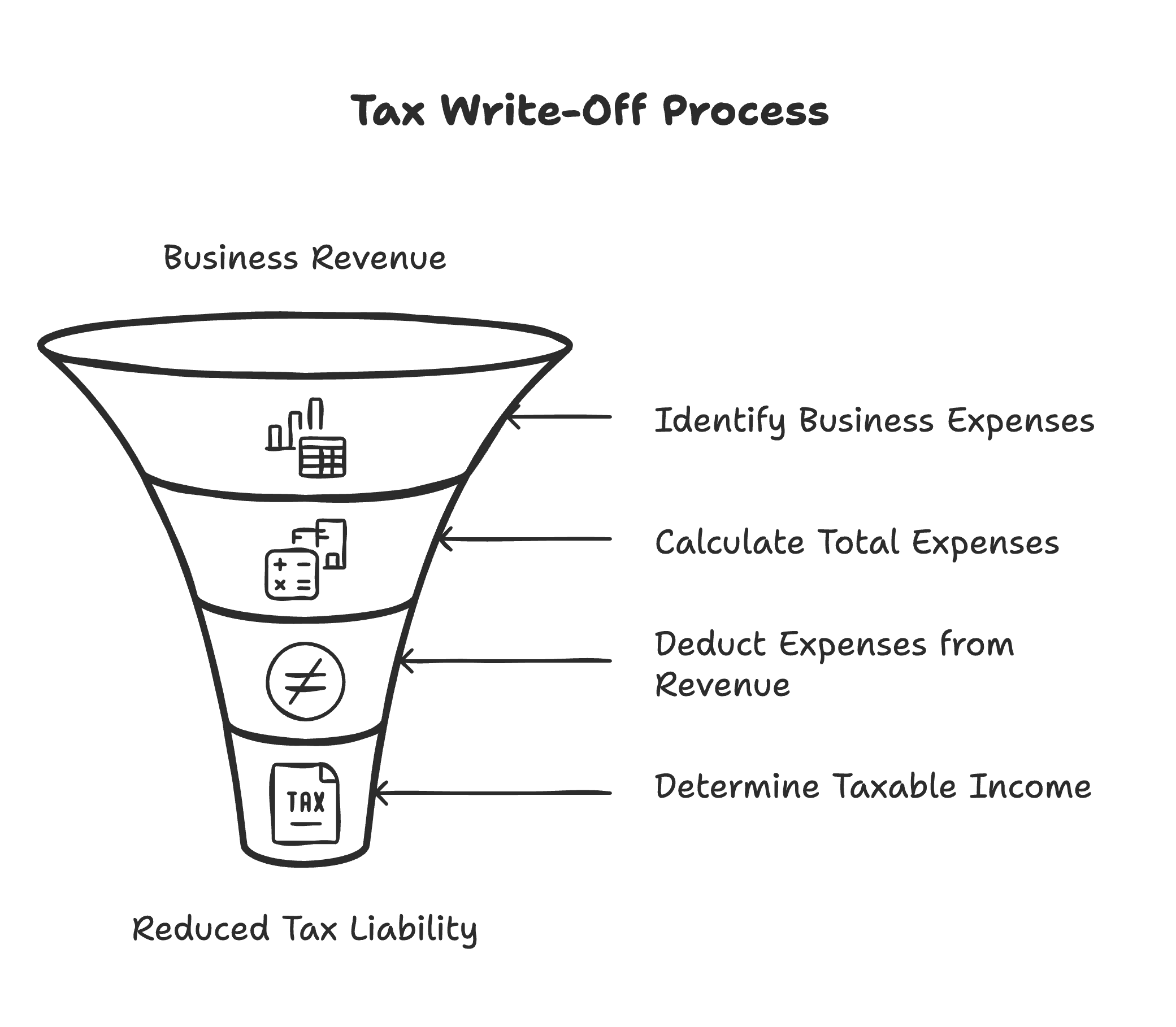
A tax write-off, also called a tax deduction, is not free money. It is a legitimate business expense that reduces the amount of business income you pay tax on. If you are self-employed and you spend money to earn business income, that expense may be deductible. The Canada Revenue Agency allows businesses to deduct many reasonable expenses incurred to earn income, and some larger assets may need to be claimed over time through capital cost allowance instead of all at once. [oai_citation:0‡Canada](https://www.canada.ca/en/revenue-agency/services/tax/businesses/topics/sole-proprietorships-partnerships/business-expenses.html?utm_source=chatgpt.com)
For contractors, understanding write-offs matters because it can help lower taxable income, reduce the chance of overpaying tax, and give you a clearer picture of what your business is actually making.
What Is a Tax Write-Off?
A tax write-off is a business expense that reduces your taxable business income. It does not mean the item is free, and it does not reduce your taxes dollar-for-dollar in most cases.
It simply means you may be able to subtract that expense from your business revenue before your income tax is calculated. The CRA’s business expense rules are based on whether the expense was incurred to earn business income and whether it is reasonable in the circumstances. [oai_citation:1‡Canada](https://www.canada.ca/en/revenue-agency/services/tax/businesses/topics/sole-proprietorships-partnerships/business-expenses.html?utm_source=chatgpt.com)
Simple Example of How a Write-Off Works
Let’s say a contractor earns $100,000 in revenue over the year.
To run the business, they also spend money on:
Tools
Fuel
Materials
Insurance
Phone
If those business expenses add up to $30,000, they are generally not taxed on the full $100,000. Instead, they may be taxed on:
$100,000 revenue - $30,000 expenses = $70,000 taxable business income
That is why proper expense tracking matters. If you miss legitimate deductions, you may end up paying tax on money that was actually spent running the business.
Why Tax Write-Offs Matter for Contractors
Contractors often have a lot of costs tied directly to earning income. Materials, tools, vehicle use, insurance, bookkeeping, and work-related travel can all add up fast.
When those expenses are tracked properly, write-offs can help:
Reduce taxable income
Lower the overall tax bill
Show your real profit more clearly
Make tax season easier to manage
Strong recordkeeping is a big part of this. Complete and organized records help support deductions and help show where your income and expenses came from. [oai_citation:2‡Canada](https://www.canada.ca/en/revenue-agency/services/tax/businesses/topics/keeping-records.html?utm_source=chatgpt.com)
If your records are messy, it becomes much easier to miss deductions or run into problems later. You can also read our guide on bookkeeping services for contractors to understand why organized books make such a difference.
Common Tax Write-Offs for Contractors in Canada
Every contracting business is different, but many contractors claim similar types of business expenses.
Tools and Equipment
Tools used in your business are often deductible. This can include things like:
Power tools
Hand tools
Safety equipment
Trade-specific equipment
That said, not every purchase is treated the same way for tax purposes. Some smaller items may be deducted as current business expenses, while larger equipment purchases may need to be deducted over time using capital cost allowance (CCA). The CRA specifically distinguishes between regular expenses and depreciable property. [oai_citation:3‡Canada](https://www.canada.ca/en/revenue-agency/services/tax/businesses/topics/sole-proprietorships-partnerships/business-expenses.html?utm_source=chatgpt.com)
Materials and Supplies
Materials and supplies used directly to complete jobs are usually deductible business expenses. Common examples include:
Lumber
Fasteners
Electrical supplies
Plumbing materials
Adhesives, sealants, and consumables
If the cost is directly connected to earning business income, it will often qualify as a deductible expense, assuming it is reasonable and properly documented. [oai_citation:4‡Canada](https://www.canada.ca/en/revenue-agency/services/tax/businesses/topics/sole-proprietorships-partnerships/business-expenses.html?utm_source=chatgpt.com)
Vehicle, Fuel, and Travel Expenses
Many contractors use a vehicle to travel to job sites, suppliers, and customers. The CRA allows self-employed individuals to deduct motor vehicle expenses used to earn business income, but only the business-use portion is deductible. [oai_citation:5‡Canada](https://www.canada.ca/en/revenue-agency/services/tax/businesses/small-businesses-self-employed-income/business-income-tax-reporting/business-expenses/motor-vehicle-expenses.html?utm_source=chatgpt.com)
This may include a portion of:
Fuel
Maintenance and repairs
Insurance
Licence and registration
Loan interest or leasing costs, where applicable
Depreciation through CCA, where applicable
If you use the same vehicle for both personal and business driving, you need to track how much of the use was for work. The CRA says your records should support total kilometres driven and business kilometres driven. Keeping a mileage log is one of the simplest ways to do that. [oai_citation:6‡Canada](https://www.canada.ca/en/revenue-agency/services/tax/businesses/small-businesses-self-employed-income/business-income-tax-reporting/business-expenses/motor-vehicle-expenses.html?utm_source=chatgpt.com)
Many contractors travel long distances or to nearby towns and cities for work. Depending on the situation, business-related travel costs may also be deductible if they were incurred to earn income and are properly documented. This can include hotel costs and a portion of meal expenses while travelling for business. Meal claims are generally subject to limits, and in many cases only 50% is deductible. [oai_citation:7‡Canada](https://www.canada.ca/en/revenue-agency/services/tax/businesses/topics/sole-proprietorships-partnerships/business-expenses.html?utm_source=chatgpt.com)
For mileage tracking, QuickBooks has a helpful resource here: QuickBooks mileage tracking guide.
Work Phone and Internet
If your phone or internet is used partly for business, you may be able to deduct the business-use portion. For example, if your phone is used 70% for work and 30% personally, you would generally only claim the business portion.
The key is being reasonable and having support for how you calculated the business percentage. The CRA’s expense rules are based on deducting the part that relates to earning income, not the personal portion. [oai_citation:8‡Canada](https://www.canada.ca/en/revenue-agency/services/tax/businesses/topics/sole-proprietorships-partnerships/business-expenses.html?utm_source=chatgpt.com)
Insurance
Insurance premiums that relate to your business are generally deductible. This may include:
Commercial liability insurance
Equipment insurance
Contractor-specific business coverage
These are normal operating costs for many contractors and are generally treated as business expenses when they relate to earning business income. [oai_citation:9‡Canada](https://www.canada.ca/en/revenue-agency/services/tax/businesses/topics/sole-proprietorships-partnerships/business-expenses.html?utm_source=chatgpt.com)
Accounting and Bookkeeping Fees
Bookkeeping, accounting, and tax preparation costs are typically deductible because they are directly related to managing your business and reporting income properly. [oai_citation:10‡Canada](https://www.canada.ca/en/revenue-agency/services/tax/businesses/topics/sole-proprietorships-partnerships/business-expenses.html?utm_source=chatgpt.com)
This is one area where spending money can save you money. Good financial records can help you catch legitimate deductions, avoid missed expenses, and reduce the chances of filing inaccurate numbers.
Write-Offs Lower Taxable Income, Not Taxes Dollar-for-Dollar
This is one of the biggest misunderstandings contractors have.
A write-off does not usually reduce your taxes by the exact amount you spent. Instead, it reduces your taxable income, which then lowers the amount of tax you owe.
Example
Suppose you buy a business tool for $1,000.
If that full amount is deductible and your effective tax rate is around 30%, the deduction might reduce your tax by roughly $300.
You still spent $1,000. The tax deduction just reduces the after-tax cost.
This is why “just write it off” is bad advice when people use it to justify unnecessary spending. A deduction can help, but it does not make the purchase free.
Some Purchases Must Be Claimed Over Time
Not every business purchase is deducted all at once. The CRA treats certain longer-lasting assets as depreciable property. These items are often claimed gradually through capital cost allowance (CCA) instead of being fully deducted in the year you buy them. [oai_citation:11‡Canada](https://www.canada.ca/en/revenue-agency/services/tax/businesses/topics/sole-proprietorships-partnerships/report-business-income-expenses/claiming-capital-cost-allowance.html?utm_source=chatgpt.com)
This can apply to some larger tools, equipment, vehicles, and other business assets that last more than one year.
That is important because many contractors assume every purchase is an immediate write-off. Sometimes it is. Sometimes it is not.
Keep Records for Every Expense
The CRA requires businesses to keep records and supporting documents. In general, records must be kept for six years from the end of the last tax year they relate to. [oai_citation:12‡Canada](https://www.canada.ca/en/revenue-agency/services/tax/businesses/topics/keeping-records/where-keep-your-records-long-request-permission-destroy-them-early.html?utm_source=chatgpt.com)
This can include:
Receipts
Invoices
Bank statements
Credit card statements
Cancelled cheques and other supporting documents
If the CRA reviews your return and you cannot support your deductions, those expenses may be denied. Organized records make that much less likely. [oai_citation:13‡Canada](https://www.canada.ca/en/revenue-agency/services/tax/individuals/topics/about-your-tax-return/long-should-you-keep-your-income-tax-records.html?utm_source=chatgpt.com)
Mixing Personal and Business Expenses Can Cause Problems
A write-off must be connected to earning business income. Personal expenses usually cannot be claimed as business deductions. [oai_citation:14‡Canada](https://www.canada.ca/en/revenue-agency/services/tax/businesses/topics/sole-proprietorships-partnerships/business-expenses.html?utm_source=chatgpt.com)
Examples:
Valid: Buying tools needed for a job
Usually not valid: Buying everyday personal clothing and calling it work gear
This is where many contractors get into trouble. If something is partly personal and partly business, only the business portion is generally deductible, and you should have a reasonable basis for the percentage claimed. [oai_citation:15‡Canada](https://www.canada.ca/en/revenue-agency/services/tax/businesses/topics/sole-proprietorships-partnerships/business-expenses.html?utm_source=chatgpt.com)
Do Tax Write-Offs Affect GST?
Write-offs usually relate to income tax, meaning they reduce your taxable business income.
GST is different. If you are registered for GST, tax collected on your invoices generally still has to be remitted, although you may be able to recover GST/HST paid on eligible business expenses through input tax credits (ITCs), subject to the CRA’s rules and your commercial-use percentage. [oai_citation:16‡Canada](https://www.canada.ca/en/revenue-agency/services/tax/businesses/topics/gst-hst-businesses/calculate-prepare-report/input-tax-credit/calculate-methods.html?utm_source=chatgpt.com)
So yes, expenses can help on the GST side too, but not in the same way they help reduce income tax.
Good Bookkeeping Helps You Catch Legitimate Write-Offs
The easiest way to maximize legitimate deductions is to keep your books updated throughout the year.
When your records are organized, you can clearly see:
Total revenue
Total expenses
Estimated profit
Possible tax owing
That makes it much easier to avoid missed deductions and surprise tax bills. For more on that, read our guide on how contractors can avoid surprise tax bills.
Tax Write-Offs Are Part of Running a Smart Contracting Business
Tax write-offs are simply a way of recognizing the real costs of earning business income.
When contractors understand how deductions work, keep receipts, and separate personal spending from business spending, they are usually in a much better position at tax time.
You do not need to know every CRA rule on your own. But you do need a system that keeps your records clean and makes sure legitimate expenses are not missed.
If you need help organizing your expenses, tracking deductions, or keeping your books in shape, Contractor Tax Hub can help you stay organized and file with more confidence.
Frequently Asked Questions
Are tax write-offs free money?
No. A write-off reduces your taxable income, not the full cost of the item. You still pay for the purchase. The deduction just lowers the income tax you may owe.
Can I write off anything if I am self-employed?
No. The expense must be incurred to earn business income and must be reasonable. Personal expenses generally do not qualify. [oai_citation:17‡Canada](https://www.canada.ca/en/revenue-agency/services/tax/businesses/topics/sole-proprietorships-partnerships/business-expenses.html?utm_source=chatgpt.com)
Do I need receipts for write-offs?
Yes. The CRA requires supporting records, and those records generally need to be kept for six years from the end of the tax year they relate to. [oai_citation:18‡Canada](https://www.canada.ca/en/revenue-agency/services/tax/businesses/topics/keeping-records/where-keep-your-records-long-request-permission-destroy-them-early.html?utm_source=chatgpt.com)
Can contractors write off tools?
Usually yes, but the tax treatment depends on the type of tool or equipment. Some purchases may be deducted as current expenses, while larger depreciable assets may need to be claimed over time through CCA. [oai_citation:19‡Canada](https://www.canada.ca/en/revenue-agency/services/tax/businesses/topics/sole-proprietorships-partnerships/report-business-income-expenses/claiming-capital-cost-allowance.html?utm_source=chatgpt.com)
Can I write off vehicle expenses?
Yes, but only the business-use portion. You should track business kilometres and keep records to support the claim. [oai_citation:20‡Canada](https://www.canada.ca/en/revenue-agency/services/tax/businesses/small-businesses-self-employed-income/business-income-tax-reporting/business-expenses/motor-vehicle-expenses.html?utm_source=chatgpt.com)
Do write-offs apply to GST?
Write-offs generally reduce income tax, while GST collected usually still has to be remitted. Eligible registrants may be able to recover GST/HST paid on certain business expenses through input tax credits. [oai_citation:21‡Canada](https://www.canada.ca/en/revenue-agency/services/tax/businesses/topics/gst-hst-businesses/calculate-prepare-report/input-tax-credit/calculate-methods.html?utm_source=chatgpt.com)