Bookkeeping and Accounting Matter for Self-Employed Contractors
Learn why bookkeeping and accounting matter for self-employed contractors in Canada. Track profit, manage GST, claim deductions, and avoid surprise tax bills.
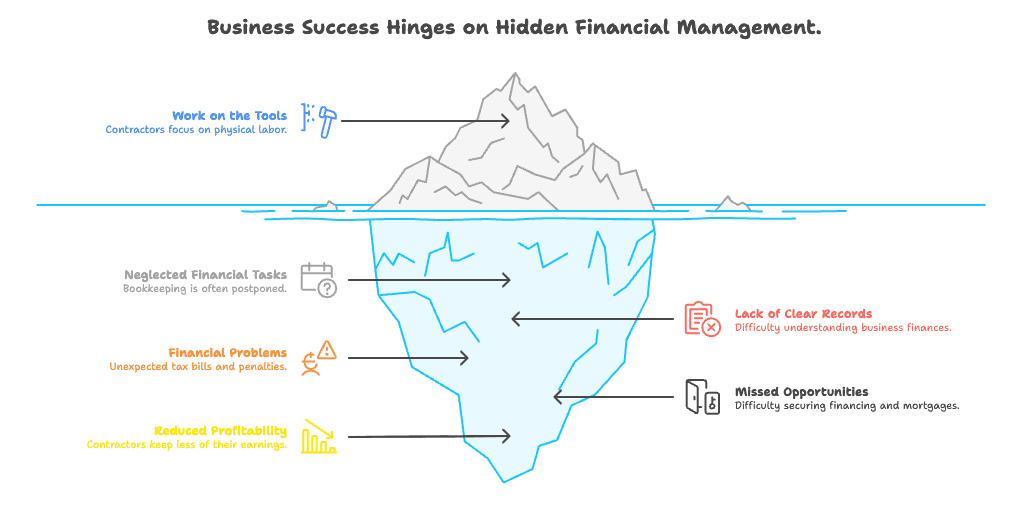
Running a Contracting Business Means Managing More Than the Work
For most self-employed contractors, the job comes first. You are on site, talking to clients, buying materials, managing schedules, and trying to keep the next project moving.
That usually means the financial side gets pushed aside.
Bookkeeping becomes something to deal with later. Receipts pile up. Bank transactions go unreviewed. Taxes become a problem for another day.
That approach works right up until it doesn’t.
Even if you are a one-person operation, you are still running a real business. You need clean records to know what you earned, what you spent, how much profit you actually made, and what you may owe the CRA. The CRA also expects you to keep organized books and supporting documents, generally for six years from the end of the tax year they relate to.
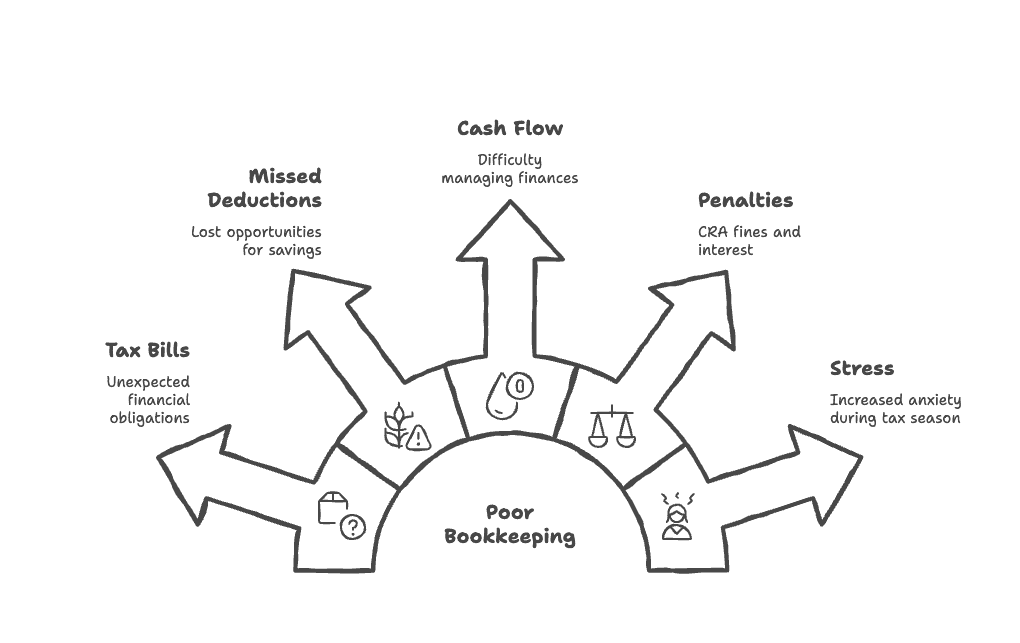
When bookkeeping is weak, contractors often run into the same problems:
surprise tax bills
missed deductions
cash flow stress
GST filing issues
CRA interest and penalties
trouble proving income for financing or a mortgage
Good bookkeeping and accounting are not just admin tasks. They help you keep control of your business and avoid expensive mistakes.
Bookkeeping Keeps Your Numbers Clear
Bookkeeping is the ongoing process of recording and organizing your business transactions.
For contractors, that usually means tracking:
invoices sent to customers
payments received
materials and supplies
tools and equipment
subcontractor payments
vehicle and fuel costs
bank and credit card activity
GST collected and GST paid on eligible business purchases
When your books are current, you can actually see what is happening in the business.
That matters because cash in the bank is not the same thing as profit.
You might finish a job and receive a big payment, but once you back out materials, fuel, subcontractors, small tools, insurance, software, and taxes, the profit may be much lower than you thought.
Up-to-date bookkeeping helps you:
track income properly
monitor monthly expenses
see job profitability
catch problems early
prepare for taxes year-round
It also makes GST reporting much easier. If you are registered, your bookkeeping should clearly show the tax you collected and the GST/HST you paid on eligible expenses that may qualify for input tax credits.
Good Books Help You Avoid Surprise Tax Bills
This is one of the biggest problems for self-employed contractors.
Unlike employees, you do not have income tax deducted from each paycheque. You are responsible for setting money aside yourself. If your net tax owing is more than $3,000 in year, the CRA may require you to pay income tax by instalments. For most individuals, those due dates are March 15, June 15, September 15, and December 15.
That is why bookkeeping matters so much.
If your records are current, you can estimate your tax exposure before year-end instead of finding out too late. Clear books help you see:
your real net income after expenses
whether you should be setting aside more tax
whether instalment payments may apply
whether cash flow is getting tight
There is another deadline contractors often miss: self-employed individuals generally have until June 15, 2026 to file their 2025 return, but if they owe tax, the balance is still generally due by April 30, 2026 to avoid interest.
That catches a lot of people off guard.
Bookkeeping Helps You Claim the Deductions You Can Actually Support
A lot of contractors do not necessarily pay too much tax because they lack expenses. They pay too much because they cannot prove them.
The CRA allows self-employed business owners to deduct reasonable business expenses incurred to earn income, but you need proper records to support the claim.
Common examples may include:
materials and supplies
accounting and bookkeeping fees
software subscriptions
cell phone costs related to business use
business insurance
advertising
home office costs, where eligible
motor vehicle expenses based on business-use percentage
certain tools and equipment
Two points matter here.
First, vehicle expenses are not automatically fully deductible. You generally need to track business versus personal use, and a mileage log is one of the most important records.
Second, larger tools and equipment are not always deducted all at once. Some purchases may need to be claimed over time through capital cost allowance instead of as a full current expense. CRA guidance specifically notes that certain tools costing $500 or more fall into Class 8 for CCA purposes.
That is exactly why good records and good advice matter. The expense itself is only part of the story. The way it should be claimed matters too.
GST Matters More Than Many Contractors Think
A lot of contractors focus only on income tax, but GST can become a problem faster.
In much of Canada, contractors in non-participating provinces generally charge 5% GST. In participating provinces, HST rates apply instead. If your taxable revenues go over $30,000 under the CRA’s small-supplier rules, you generally have to register and start charging GST/HST. Some businesses also register voluntarily before that point.
Once you are registered, poor bookkeeping can create several issues:
underreporting tax collected
missing input tax credits
filing late
remitting the wrong amount
Good bookkeeping makes GST filings easier because the numbers are already sorted. You know what you billed, what you collected, and what GST/HST you paid on eligible business purchases.
CRA Compliance Starts With Recordkeeping
This part is simple: if the CRA asks for support, you need to have it.
The CRA says business records include your accounting and financial documents, and they must be kept organized. That includes invoices, receipts, bank statements, GST/HST records, and other documents that support what you reported. Records can be paper or electronic, as long as they are reliable and accessible.
If your records are incomplete, you can end up dealing with:
denied deductions
GST issues
reassessments
interest and penalties
unnecessary stress during a review
Clean books are not just useful for tax season. They are your backup when questions come up.
Revenue Is Not the Same as Profit
A lot of contractors judge a year by total deposits.
That is not enough.
A business can bring in strong revenue and still be underperforming because of rising material costs, too much driving, poor pricing, or jobs with weak margins.
Good bookkeeping helps you answer the questions that actually matter:
Which jobs make the best money?
Are your prices covering overhead?
Are vehicle costs eating away your margin?
Are subcontractor costs too high?
Are you setting aside enough for tax?
Those answers help you run the business better, not just file taxes more easily.
Why an Accountant Still Matters
Software helps. Bookkeeping helps more. But accounting is where the numbers get interpreted properly.
A good accountant does more than file a return. They help you:
understand what the numbers mean
clean up bookkeeping problems before they grow
handle GST properly
plan for taxes instead of reacting to them
claim deductions correctly
avoid sloppy filing mistakes
That matters even more in contracting, where income can be seasonal, job costs move around, and equipment purchases can affect both cash flow and taxes.
The right support can save money, reduce risk, and make decisions easier.
Bookkeeping and Accounting Are Not Overhead. They Are Protection.
A lot of self-employed contractors treat bookkeeping as something optional.
It is not.
It protects your cash flow. It protects your tax reporting. It protects your ability to make decisions using real numbers instead of guesses.
When your books are organized, tax season is easier, GST is easier, financing is easier, and running the business gets less chaotic.
That is the real value.
If you want your business to feel more under control, getting your bookkeeping and accounting handled properly is one of the smartest moves you can make. And if you want help from professionals who work with contractors, Contractor Tax Hub can help you get things cleaned up and kept that way.
FAQ
Do I really need bookkeeping if I am a one-person contractor?
Yes. A solo contractor is still running a business. You need accurate records to track income, expenses, GST, and taxes. The CRA also expects you to keep supporting records, generally for six years.
How often should I update my bookkeeping?
Monthly is a good minimum. Waiting until tax season usually leads to missing receipts, bad estimates, and avoidable stress.
Can I do my own bookkeeping?
Yes, but many contractors eventually find it is better to get help. The issue is not just entering transactions. It is making sure expenses are categorized properly, GST is tracked correctly, and year-end numbers are usable.
Do I have to register for GST right away?
Not always. In general, you must register once you stop being a small supplier under the CRA rules, which usually happens when taxable revenues exceed $30,000 under the applicable threshold test. Some contractors register voluntarily earlier.
Can I deduct my truck, fuel, and travel?
Usually, you may deduct the business-use portion of eligible motor vehicle expenses, but you need proper records. A mileage log is important. Travel expenses also need to be tied to earning business income and supported with documentation.
Are tools always fully deductible in the year I buy them?
No. Some smaller items may be current expenses, but larger tools and equipment may need to be claimed over time through capital cost allowance.
Need help getting your books organized or staying ahead of tax season? Contractor Tax Hub can help you put the right systems in place so your business stays organized, compliant, and easier to run.